Medical-Grade vs. Nonprescription Oxygen Concentrators
Not all oxygen concentrators are designed for prescribed medical oxygen therapy. Before you buy, understand the difference between prescription oxygen equipment and oxygen machines marketed for wellness.
If you have COPD, pulmonary fibrosis or another respiratory condition, choosing the right oxygen equipment matters.
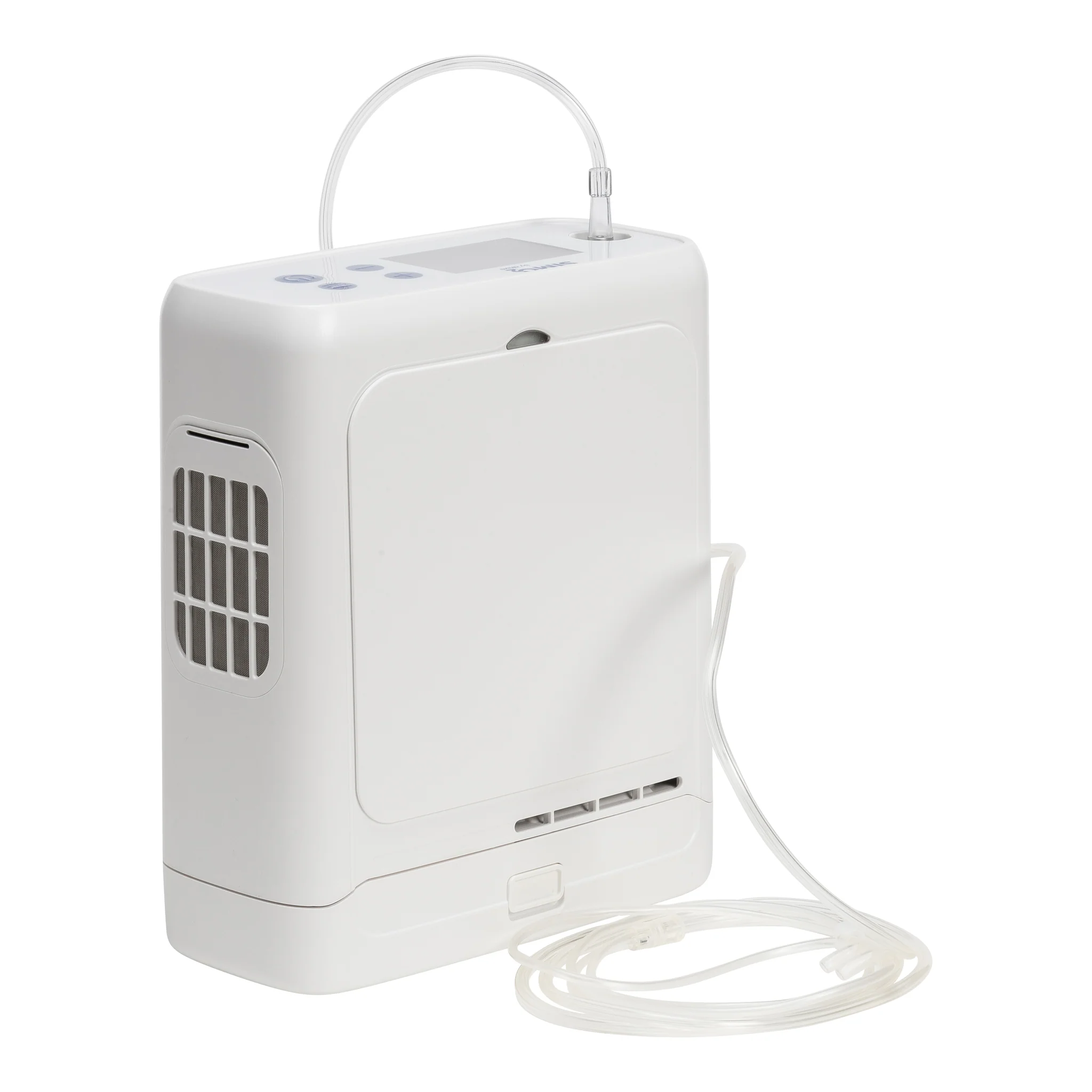
Drive Medical SIMO2
What Is the Difference Between Medical-Grade and Nonprescription Oxygen Concentrators?
Prescription medical oxygen concentrators are intended to provide supplemental oxygen therapy under the direction of a healthcare professional. Nonprescription oxygen machines may be marketed for general wellness rather than medical oxygen therapy.
Although these products may look similar, their intended use, FDA regulatory status, oxygen delivery performance and labeling may differ. They should not automatically be considered medically interchangeable.
Many oxygen concentrators advertised online feature attractive prices, lightweight designs and high advertised oxygen concentrations. However, these specifications alone do not establish that a machine is appropriate for prescribed supplemental oxygen.
If you require oxygen for COPD, emphysema, pulmonary fibrosis or another medical condition, your equipment should meet your individual prescribed oxygen requirements.
Medical-Grade vs. Nonprescription Oxygen Concentrators: Side-by-Side Comparison
The most important distinction is whether the specific device is intended and appropriately authorized for medical oxygen therapy.
| Feature | Prescription Medical Concentrators | General Wellness Oxygen Machines |
|---|---|---|
| Intended Use | Prescribed supplemental oxygen therapy | Wellness or other labeled purposes |
| FDA Status | Verify applicable medical-device authorization | Medical-device clearance should not be assumed |
| Prescription | Required | Often advertised without a prescription |
| Oxygen Delivery | Model-specific medical device specifications | Performance varies by model |
| COPD Use | Must meet prescribed oxygen requirements | Medical suitability should not be assumed |
| Warranty | Varies by manufacturer and model | Varies by manufacturer and model |
| Price | Affordable and premium options available | Often marketed at lower prices |
This comparison describes general product categories. Individual device specifications, regulatory status and intended use must be verified by model. A prescription device is not necessarily appropriate for every oxygen patient.
Do You Need a Prescription to Buy an Oxygen Concentrator?
Yes. In the United States, oxygen concentrators intended for prescription medical oxygen therapy require a prescription.
Your healthcare provider determines whether supplemental oxygen is medically necessary and what type of oxygen delivery is appropriate for your condition.
Your oxygen prescription may specify continuous flow, pulse-dose delivery or different requirements for rest, activity and sleep.
Some oxygen machines can be purchased online without submitting a prescription. However, the ability to purchase a machine without a prescription does not establish that it is suitable for medical oxygen therapy.
Important: Do not start supplemental oxygen therapy, change prescribed oxygen settings or replace prescribed oxygen equipment without guidance from your healthcare provider. Receiving too little or too much oxygen can be harmful.
Inspired Portable Oxygen requires a valid prescription for the prescription oxygen concentrators we sell.
What Does FDA Clearance Mean for an Oxygen Concentrator?
FDA clearance is a regulatory determination that applies to a specific medical device and its intended use.
Many prescription oxygen concentrators are marketed through the FDA's 510(k) clearance pathway. Under this process, the FDA determines whether a device is substantially equivalent to a legally marketed predicate device.
Is FDA Registered the Same as FDA Cleared?
No. FDA establishment registration and device listing do not mean that a product has received FDA clearance or approval.
A manufacturer may be registered with the FDA without every product it sells having FDA clearance for medical oxygen therapy.
How to Verify an Oxygen Concentrator's FDA Clearance
- Identify the exact device model. Check the manufacturer's product labeling and instruction manual.
- Ask for the FDA clearance information. Request the applicable 510(k) number or other regulatory authorization.
- Search the official FDA database. Verify that the record corresponds to the actual device and its intended use.
- Review the intended-use statement. Determine whether the device is intended for prescribed supplemental oxygen therapy.
- Confirm medical suitability. Ask your healthcare provider whether the device can meet your individual oxygen requirements.
Not finding a retail brand name in the FDA database does not, by itself, establish that a device lacks clearance. Some devices are sold under different trade names. Verify the underlying manufacturer and device identity.
Can You Use a Nonprescription Oxygen Concentrator for COPD?
A nonprescription oxygen concentrator should not be assumed to meet the medical oxygen requirements of someone with COPD.
The American Lung Association cautions that over-the-counter portable oxygen concentrators may not meet the oxygen needs of patients with COPD or pulmonary fibrosis who require prescribed supplemental oxygen.
Even among prescription medical oxygen concentrators, one device may be appropriate for a particular patient while another may not meet that patient's requirements.
What Should Patients Look For?
- A device intended for prescribed supplemental oxygen therapy.
- Appropriate FDA regulatory authorization for the specific model.
- Oxygen delivery compatible with your prescription.
- Appropriate performance during your daily activities.
- Adequate battery life and backup oxygen arrangements.
- Manufacturer warranty and dependable equipment support.
Read the American Lung Association's guidance on portable oxygen concentrators for additional information.
Do not replace prescribed oxygen equipment based on price alone. Consult your healthcare provider before switching devices, particularly if you require oxygen during activity or sleep.
Understanding Oxygen Concentration, Flow Settings and Actual Oxygen Delivery
Oxygen concentrator advertisements often highlight oxygen concentration, flow settings and maximum oxygen output. These measurements describe different aspects of device performance and should not be confused with one another.
Is 93% Oxygen Better Than 90% Oxygen?
Not necessarily. Oxygen concentration describes the proportion of oxygen in the gas produced by a device. It does not tell you the total amount of oxygen delivered to the patient.
A machine producing a higher oxygen concentration but delivering a smaller volume of gas may provide less oxygen overall than another machine producing a slightly lower concentration at a larger delivery volume.
Oxygen concentration must be evaluated together with delivery volume, breathing rate, device performance and the patient's individual requirements.
Are Pulse Settings the Same as Liters Per Minute?
No. A pulse-dose setting of 2 does not automatically mean a portable oxygen concentrator delivers 2 liters per minute of continuous-flow oxygen.
Pulse-dose portable oxygen concentrators deliver measured bursts of oxygen when inhalation is detected.
Continuous-flow concentrators deliver oxygen at a steady rate, typically expressed in liters per minute.
| Feature | Pulse Dose | Continuous Flow |
|---|---|---|
| Delivery | Measured pulses triggered by inhalation | Steady oxygen flow |
| Settings | Manufacturer-specific pulse settings | Liters per minute |
| Portability | Common in lightweight portable concentrators | Stationary and some portable systems |
| Suitability | Requires individual assessment | Requires individual assessment |
Does a Higher Pulse Setting Mean More Oxygen?
A concentrator with eight pulse settings does not automatically deliver more oxygen than a concentrator with six settings.
Pulse settings are manufacturer-specific. Actual oxygen volume per breath, maximum oxygen production, breathing-rate performance and breath detection are more meaningful comparisons than the number of available settings alone.
Does a Higher Advertised Flow Rate Mean Higher Oxygen Output?
Not necessarily. Some oxygen machines advertise a range of gas flow rates while specifying their highest oxygen concentration at only one of those rates.
Ask for the oxygen concentration maintained at the actual flow rate you intend to use. Do not assume the highest advertised oxygen concentration applies to every setting.
Shopping for VARON or Other Affordable Oxygen Concentrators?
Consumers researching affordable oxygen concentrators may encounter brands such as VARON alongside established prescription oxygen equipment brands.
When comparing products, the most important question is not simply which brand offers the lowest price, highest oxygen concentration or most flow settings.
The important question is whether the specific model is intended and appropriately authorized for your prescribed medical oxygen requirements.
Are VARON Oxygen Concentrators Medical Grade?
The answer depends on the specific model, its intended-use labeling and regulatory status.
VARON offers a range of oxygen products. Consumers should review the manufacturer's current labeling and regulatory documentation for the specific model they are considering.
Do not assume that every oxygen concentrator sold under a particular brand has the same intended use or regulatory status.
If a device is labeled for general wellness rather than medical oxygen therapy, do not assume it is an appropriate substitute for prescribed oxygen equipment.
Can You Use a VARON Oxygen Concentrator for COPD?
If you have COPD and require prescribed supplemental oxygen, verify that the exact device you are considering is intended for medical oxygen therapy and can meet your prescribed oxygen requirements.
Your healthcare provider should confirm the suitability of any replacement oxygen concentrator, regardless of brand.
Looking for an Affordable Prescription Oxygen Concentrator?
You do not necessarily need to spend thousands more to purchase a prescription portable oxygen concentrator from an established medical equipment manufacturer.
The Drive Medical SIMO2 offers lightweight portability, six pulse-dose settings and a five-year limited concentrator warranty.
Brand names are used for product identification and consumer education. Inspired Portable Oxygen is not affiliated with VARON. No claim is made that all products sold under a particular brand have the same regulatory status or intended use.
Seven Things to Check Before Buying an Oxygen Concentrator Online
- Intended Medical Use Is the device intended for prescribed supplemental oxygen therapy or general wellness?
- FDA Clearance Can the seller provide the applicable FDA documentation for the specific model?
- Oxygen Delivery Method Does the device provide pulse-dose oxygen, continuous flow or both?
- Actual Oxygen Output What oxygen volume and concentration does the device deliver at the settings you intend to use?
- Prescription Compatibility Has your healthcare provider confirmed that the device meets your oxygen requirements?
- Battery Life and Portability What is the expected battery runtime at your prescribed setting, and what does the device weigh with its battery?
- Warranty and Manufacturer Support Who services the equipment? How long are the concentrator, battery and sieve beds covered?
Price is important, but a lower purchase price may not represent better value if the equipment does not meet your oxygen needs or lacks appropriate long-term support.
Meet the Drive Medical SIMO2
Looking for an affordable portable oxygen concentrator from an established medical equipment manufacturer?
The Drive Medical SIMO2 combines lightweight portability, six pulse-dose settings and a five-year limited concentrator warranty.
- Brand-new prescription portable oxygen system
- Established medical equipment brand
- Rechargeable battery operation
- AC and DC power options
- FREE shipping
- Affordable financing options
Prescription required. Pulse-dose oxygen only. Actual battery runtime varies. Manufacturer warranty terms apply. Financing subject to approval.
Drive Medical SIMO2 Specifications
| Specification | Drive Medical SIMO2 |
|---|---|
| Oxygen Delivery | Pulse dose |
| Pulse Settings | 1–6 |
| Continuous Flow | No |
| Maximum Oxygen Production | 1260 mL/min |
| Oxygen Concentration | 90% (−3/+6 percentage points) |
| Weight | 4.76 lbs with battery |
| Battery Runtime | Up to 4 hours at pulse setting 2 |
| Dimensions | 7.36 × 3.46 × 7.24 inches |
| Concentrator Warranty | 5-year limited |
| Prescription | Required |
Specifications are based on available manufacturer product information. Warranty coverage is subject to manufacturer terms and exclusions. Actual battery runtime and device performance vary with operating conditions and oxygen settings.
Is the SIMO2 right for everyone? No. The SIMO2 provides pulse-dose oxygen only and is not appropriate for every oxygen prescription. Your healthcare provider should confirm that the device meets your prescribed oxygen requirements.
Frequently Asked Questions About Medical-Grade Oxygen Concentrators
What is a medical-grade oxygen concentrator?
A medical-grade oxygen concentrator is generally understood to be a device intended for supplemental medical oxygen therapy. Consumers should verify the specific device's regulatory authorization and prescription labeling rather than relying on the marketing term medical-grade alone.
Can I buy a medical oxygen concentrator without a prescription?
Prescription oxygen concentrators require a valid prescription in the United States. Some wellness oxygen machines are sold without prescriptions, but that does not establish that they are suitable for prescribed medical oxygen therapy.
Are nonprescription oxygen concentrators suitable for COPD?
Medical suitability should not be assumed. The American Lung Association cautions that over-the-counter portable oxygen concentrators may not meet the needs of patients requiring prescribed oxygen. Consult your healthcare provider before replacing prescribed equipment.
Is FDA registered the same as FDA cleared?
No. FDA registration and device listing do not establish that a device has received FDA clearance or approval. Verify the regulatory status of the specific model and its intended use.
Are VARON oxygen concentrators FDA cleared?
FDA clearance must be verified for the specific device model. A brand may offer products with different intended uses and regulatory status. Request the applicable FDA documentation for the exact VARON model you are considering.
Is VARON a medical-grade oxygen concentrator?
VARON is a brand that offers multiple oxygen products. Whether a particular device is intended for medical oxygen therapy depends on its model-specific labeling and regulatory status. Do not assume that all products sold under one brand have the same medical intended use.
Can I use a VARON oxygen concentrator for COPD?
If you require prescribed oxygen for COPD, ask your healthcare provider to confirm that the specific device is intended for medical oxygen therapy and can meet your prescribed oxygen requirements. Do not assume that a wellness oxygen machine is a suitable replacement for prescribed oxygen equipment.
Is a higher oxygen concentration better?
Not necessarily. Oxygen concentration describes the percentage of oxygen in the gas produced. The actual oxygen delivered also depends on delivery volume, breathing rate and device performance.
Does a setting of 6 mean 6 liters per minute of oxygen?
Not on a pulse-dose concentrator. Pulse settings are manufacturer-specific and are not equivalent to continuous-flow liters per minute. Check the manufacturer's actual oxygen delivery specifications.
Can I replace my current oxygen concentrator with a different brand?
A different device may be appropriate, but matching setting numbers do not establish equivalent oxygen delivery. Your healthcare provider should confirm that the replacement meets your prescribed oxygen requirements.
Are affordable prescription portable oxygen concentrators available?
Yes. The Drive Medical SIMO2 is an affordable prescription portable oxygen concentrator with six pulse settings, rechargeable battery operation and a five-year limited concentrator warranty. Review current pricing and confirm medical suitability before purchasing.
Does the Drive Medical SIMO2 require a prescription?
Yes. The SIMO2 is a prescription portable oxygen concentrator intended for patients whose oxygen requirements can be met by its pulse-dose delivery system.
Can I use a pulse-dose oxygen concentrator while sleeping?
Suitability depends on the specific device, your prescription and your breathing pattern during sleep. Consult your healthcare provider before using a pulse-dose oxygen concentrator overnight.
You Don't Have to Sacrifice Medical-Grade Equipment for Affordability.
Compare prescription portable oxygen concentrators from established medical equipment manufacturers. We'll help you understand your options, compare battery packages and find affordable equipment to discuss with your healthcare provider.
1-800-608-8651Editorial disclosure: Inspired Portable Oxygen is an independent retailer of prescription portable oxygen concentrators, including Drive Medical products. We have a commercial interest in the equipment we sell. This guide is intended to provide consumer education and explain equipment purchasing considerations.
References and Additional Resources
The following resources provide independent guidance on oxygen therapy, medical-device regulation and oxygen concentrator selection.
- American Lung Association. Getting Started with a Portable Oxygen Concentrator . Guidance concerning portable oxygen equipment and nonprescription oxygen concentrators.
- American Lung Association. Oxygen Delivery Devices and Accessories . Information about oxygen equipment types and oxygen delivery methods.
- U.S. Food and Drug Administration. 510(k) Premarket Notification Database . Official database for researching model-specific medical-device clearance.
- U.S. Food and Drug Administration. Premarket Notification 510(k) . Information about the FDA's medical-device clearance pathway.
- U.S. Food and Drug Administration. Medical Device Registration and Listing . Information about FDA establishment registration and device listing.
- Inspired Portable Oxygen. Drive Medical SIMO2 Product Information . Product specifications, warranty information and current purchase options.
Medical disclaimer: This guide is provided for general educational purposes and does not constitute medical advice. Always consult your healthcare provider regarding supplemental oxygen therapy, prescribed settings and equipment suitability. Never change or discontinue prescribed oxygen therapy based solely on information found online.